← Day Trips from Athens Airport • Athens Airport Transport Guide
Athens Airport to Epidaurus 2026: Transfer & Ancient Theatre Guide
Epidaurus represents one of ancient Greece’s most extraordinary archaeological treasures, home to the world’s best-preserved classical theatre and the legendary Sanctuary of Asclepius, the ancient world’s most famous healing centre. Located approximately 170 kilometres from Athens Airport, reaching this UNESCO World Heritage site requires about 2.5 hours of driving via Corinth. The ancient Theatre of Epidaurus, with its extraordinary acoustics and capacity for 14,000 spectators, remains one of humanity’s greatest architectural achievements. This guide covers transport options from the airport, what to expect at this remarkable site, and why Epidaurus makes an essential destination for classical archaeology enthusiasts and theatre lovers.
How to Get from Athens Airport to Epidaurus
Three main transport options connect Athens Airport to Epidaurus, each offering distinct advantages depending on your travel preferences, budget, and flexibility requirements. The journey spans approximately 170 kilometres via the A8 motorway toward Corinth, then southward toward the Peloponnese interior. Motorway tolls total approximately €8–10 for the journey. Unlike some distant archaeological sites, Epidaurus combines reasonable travel time with extraordinary historical significance, making it a manageable journey while still allowing substantial site exploration time.
Book a tour or day trip from Athens – instant confirmation
Welcome Pickups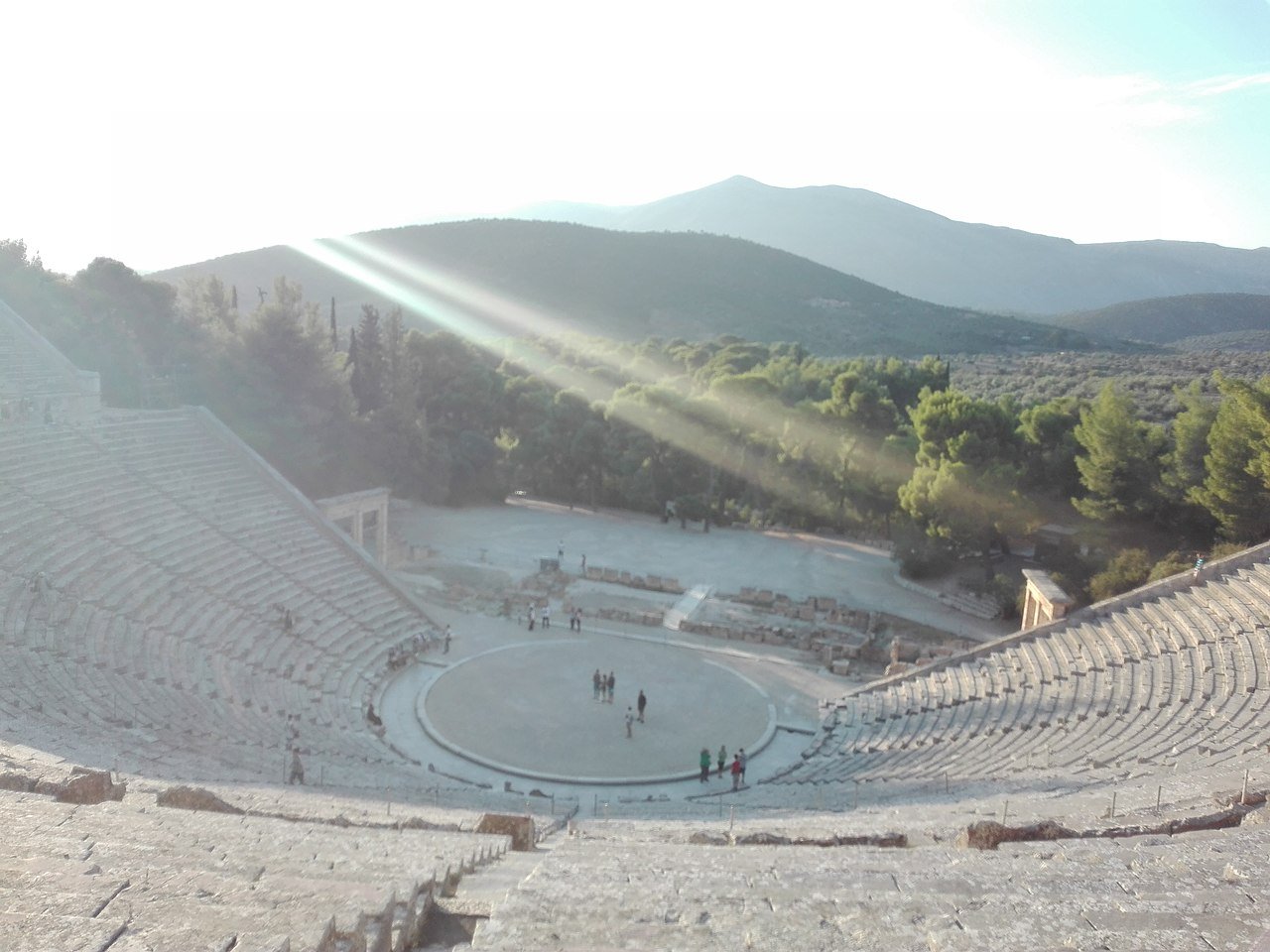
| Option | Duration | Cost (approx) | Best For |
|---|---|---|---|
| Private Transfer | 2.5 hours | €130–160 | Door-to-door convenience, luggage, comfort |
| Self-drive Rental Car | 2.5 hours | €40–80 (daily) + tolls + fuel | Maximum flexibility, multiple site visits |
| KTEL Bus (via Athens) | 3–4 hours | €10–15 | Budget travellers, public transport preference |
Private Transfer from Athens Airport to Epidaurus
A private airport transfer offers direct service from Athens Airport to Epidaurus, combining convenience with reasonable cost. Professional drivers collect you from the airport terminal with a nameplate, manage luggage efficiently, and provide direct routing via the A8 motorway and Corinth road. Journey time is approximately 2.5 hours depending on traffic conditions and your specific Epidaurus accommodation location.
Private transfer costs typically range from €130 to €160 for a standard sedan accommodating up to three passengers, with larger vehicles available at proportionally higher rates. This option represents excellent value, particularly if you’re arriving with substantial luggage or prefer not navigating unfamiliar Greek roads. Pre-booking ensures fixed pricing and eliminates uncertainty, allowing accurate budget planning. Most private transfer operators can accommodate flexible timing, helpful if your flight arrives outside standard working hours.
Private transfers prove particularly valuable if you’re basing yourself in nearby Nafplio, just 20 minutes from Epidaurus, which offers superior accommodation, charming atmosphere, and convenient access to multiple Peloponnese archaeological sites. Drivers are familiar with the region and can provide recommendations for accommodation, restaurants, and visiting strategies for maximising your archaeological experience.
Self-Drive Rental Car from Athens Airport to Epidaurus
Renting a car at Athens Airport provides maximum flexibility for exploring Epidaurus and nearby attractions including Corinth, Mycenae, and Nafplio. Daily rental rates range from €40 to €80 depending on vehicle type and season, with fuel costs approximately €12–18 for the round trip to Epidaurus. Motorway tolls add €8–10 to your journey costs. The drive spans approximately 2.5 hours via the A8 motorway and regional roads, straightforward to navigate and clearly signposted.
Book a tour or day trip from Athens – instant confirmation
Welcome PickupsThe A8 motorway provides well-maintained driving conditions and adequate rest areas for breaks and refreshments. The secondary roads from Corinth toward Epidaurus wind through scenic countryside, offering pleasant driving and opportunities to stop at roadside villages and viewpoints. A rental car enables visiting multiple Peloponnese sites within a multi-day itinerary, combining Epidaurus with nearby Mycenae (approximately 45 minutes), Corinth (approximately 1 hour), and Nafplio (approximately 20 minutes).
Ensure you’re comfortable with Greek driving standards, understand roundabout protocols, and possess an international driving permit if required by your nationality. Greek roads are generally well-maintained, though traffic in Athens and approaching Corinth can be heavy during peak hours. Parking at the archaeological site is straightforward, with adequate free or inexpensive parking available for visitors.
KTEL Bus Service from Athens to Epidaurus
KTEL buses offer the most economical option to Epidaurus, with fares approximately €10–15 from Athens. However, no direct bus service connects Athens Airport to Epidaurus. You must first travel from the airport to Athens city centre, then catch a connecting KTEL bus from the Kifissos bus station to Epidaurus region. This adds 1–1.5 hours to your total journey time, extending airport-to-Epidaurus travel to approximately 3–4 hours total.
The airport-to-city shuttle or metro journey takes approximately 1–1.5 hours depending on traffic conditions. Once in Athens city centre, navigate to the Kifissos KTEL terminal serving long-distance buses to the Peloponnese. KTEL buses depart regularly, typically every 30 minutes to 1 hour during peak hours. The Athens-to-Epidaurus journey takes approximately 1.5–2 hours, making total airport-to-Epidaurus travel time 3–4 hours when accounting for city transfers.
Book a tour or day trip from Athens – instant confirmation
Welcome PickupsKTEL buses are comfortable and modern with air conditioning and adequate luggage storage. This option suits budget travellers comfortable with transfers and those without driving preferences. However, the extended journey time and connection complexity make private transfer or self-drive preferable if you’re arriving fatigued or have substantial luggage. Bus schedules vary seasonally; confirm departure times when planning your itinerary.
What to See at Epidaurus
Epidaurus stands as one of classical Greece’s most remarkable archaeological sites, encompassing both the legendary Sanctuary of Asclepius and the extraordinary Theatre of Epidaurus, widely recognised as the world’s best-preserved ancient theatre. The sanctuary served as the Mediterranean’s most important healing centre, attracting patients from across the ancient world seeking cures for diseases and injuries. The theatre, constructed in the fourth century BCE, was later used for festivals and performances, demonstrating the sanctuary’s religious and cultural significance beyond medical practice. Today, the site stretches across extensive grounds featuring temples, treasuries, athletic facilities, and administrative buildings, providing comprehensive insight into ancient Greek religious practice and medical understanding.
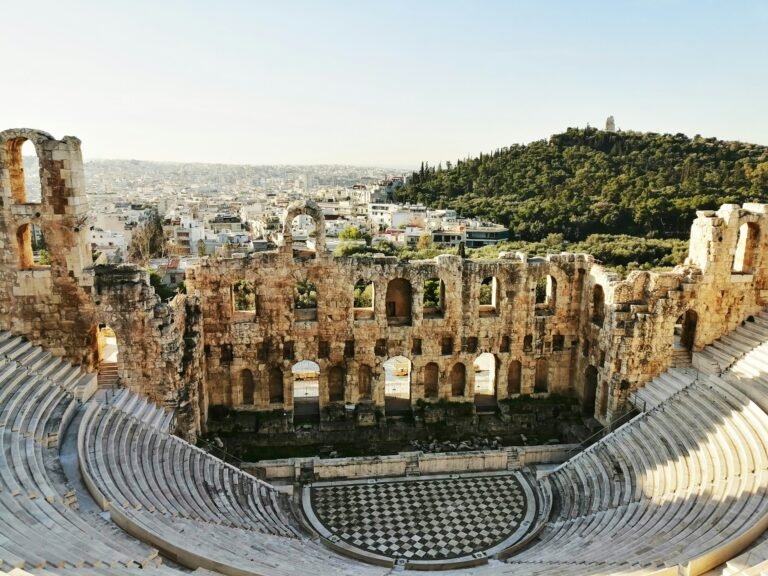
The Theatre of Epidaurus remains the most impressive structure, with 14,000 seats arranged in a precisely calculated semicircle enabling extraordinary acoustics. A whisper on the stage carries to the back rows with remarkable clarity, demonstrating the ancient architects’ sophisticated understanding of sound physics and engineering precision. This acoustic perfection allows modern audiences to appreciate the theatre’s genius; standing on the stage, visitors can hear each other’s quietest words from every seat, validating the theatre’s reputation as humanity’s greatest acoustic achievement. The theatre’s preservation enables original theatrical productions during summer festivals, allowing contemporary spectators to experience classical drama performances in the original setting, reconnecting audiences with ancient theatrical traditions across 2,400 years of history.
The Sanctuary of Asclepius adjacent to the theatre hosted the ancient world’s most renowned healing practices, with patients arriving hoping for miraculous cures. The sanctuary included the Temple of Asclepius, an Abaton (sacred sleeping chamber where healing dreams supposedly occurred), athletic facilities for rehabilitation, and therapeutic gardens. The Archaeological Museum displays exceptional artefacts including architectural sculptures from the Temple of Asclepius, votive offerings left by grateful patients, and surgical instruments revealing advanced medical knowledge. The Tholos building, a mysterious circular structure whose exact purpose remains uncertain, features elegant proportions and sophisticated architectural design. The Stadium, where athletic competitions occurred as part of the healing process, demonstrates the ancient understanding of physical exercise’s therapeutic value.
Guided Tours to Epidaurus from Athens
Guided tours to Epidaurus from Athens provide expert context explaining the sanctuary’s medical practices, the theatre’s acoustical marvels, and the religious beliefs underlying ancient healing approaches. Professional guides explain how Asclepius worship functioned, what treatments patients underwent, and how the theatre functioned within the sanctuary complex. Tours often include visits to the museum, detailed theatre explorations allowing acoustic demonstrations, and narrative explaining the theatre’s engineering brilliance. Most tours depart mid-morning from central Athens, allowing morning leisure time and avoiding excessive early departure requirements.
Where to Stay Near Epidaurus
Nafplio makes the ideal base — just 20 minutes from Epidaurus — offering superior accommodation quality, charming waterfront atmosphere, excellent restaurants, and convenient access to other Peloponnese archaeological sites. Nafplio’s position as a beautiful walled town with Venetian fortresses, traditional architecture, and vibrant local atmosphere makes it an exceptional base for exploring the Peloponnese broadly. From Nafplio, you can reach Epidaurus for morning exploration, then visit Mycenae, Corinth, or other regional attractions in the afternoon. The town’s numerous tavernas serve traditional Greek cuisine with fresh seafood and regional specialities, providing excellent dining within walking distance of most accommodations.
Practical Tips for Visiting Epidaurus
Plan to arrive at the theatre early, preferably before 10 AM, to explore the stage floor and experience the extraordinary acoustics before crowds arrive. The theatre seats allow free seating throughout the structure; sitting at various levels enables appreciation of different acoustic perspectives and visual sightlines. Bring comfortable walking shoes, sunscreen, a hat, and abundant water, as the site offers limited shade and can be intensely sunny during midday hours. The sloped seating, while comfortable once seated, requires climbing numerous steps; visitors with mobility limitations should plan accordingly and potentially focus on lower seating sections.
Entrance fees are approximately €12 for the archaeological site and €6 for the museum, or €16 for a combined ticket. The museum requires 1–1.5 hours for thorough viewing of the exceptional artefacts and architectural sculptures. If visiting during summer months, check whether any theatrical performances are scheduled; watching classical drama or modern performances in the original theatre provides extraordinary atmospheric immersion unavailable at other archaeological sites. The site includes a café offering basic refreshments, but for better meal variety, dine in Nafplio approximately 20 minutes away.
Photography is permitted throughout the site, with the theatre proving exceptionally photogenic during golden hour (early morning or late afternoon). Mobile phone coverage is generally reliable; internet connectivity may be limited. The site is accessible year-round, with extended summer hours (typically 8 AM to 7 PM) and shorter winter hours (8 AM to 3 PM). Spring (April–May) and autumn (September–October) offer ideal visiting conditions with comfortable temperatures. Summer months bring larger crowds and intense heat; winter offers peaceful exploration but reduced daylight hours requiring careful timing of visits.
Frequently Asked Questions
Can I visit Epidaurus as a day trip from Athens Airport?
Yes, Epidaurus makes an excellent day trip from Athens Airport, with the 170-kilometre distance and 2.5-hour journey combining manageable travel time with substantial site exploration opportunity. You can depart the airport mid-morning, arrive at Epidaurus by early afternoon, spend 3–4 hours exploring the theatre and sanctuary, then return to Athens. However, for a more relaxed experience enabling thorough museum exploration and visiting nearby Mycenae or Corinth, spending one night in nearby Nafplio provides superior value and allows multi-site regional exploration within a convenient base.
What makes the Theatre of Epidaurus acoustically special?
The Theatre of Epidaurus demonstrates ancient architectural genius through its precisely calculated semicircular design and engineered construction enabling extraordinary sound transmission. A whisper or normal speech on the theatre’s stage becomes audible throughout all 14,000 seats without amplification, a phenomenon resulting from the theatre’s geometric shape, stone construction, and subtle slope angles. The orchestra (circular performing area) and surrounding hillside function together to focus and project sound evenly throughout the auditorium. This acoustic perfection reveals ancient architects’ sophisticated understanding of sound physics, enabling audiences throughout the vast theatre to hear dialogue, music, and performances with clarity. Modern acoustic engineers study the theatre to understand these principles, which remain applicable to contemporary theatre design.
What is the best time to visit Epidaurus?
April to May and September to October offer optimal visiting conditions, with moderate temperatures (20–28 degrees Celsius), minimal rainfall, and manageable crowd levels. Spring provides wildflower displays throughout the sanctuary grounds, enhancing the atmospheric experience. Summer months (June–August) attract substantial crowds and temperatures exceeding 35 degrees Celsius, requiring early arrival and heat precautions. Winter (November–March) features shorter daylight hours, occasional rainfall, and fewer visitors, offering peaceful exploration for those preferring solitude. If visiting during summer festival season (typically July–August), check whether theatrical performances are scheduled; experiencing classical drama in the original theatre provides an unparalleled cultural experience impossible to replicate elsewhere.
For a full comparison of all Athens Airport transfer options, see our Athens Airport Transfers Complete Guide 2026.
Athens Airport Transfer
Ready to Book Your Taxi?
€40 fixed rate • Meet & greet at arrivals • 24/7 availability
Book Your Transfer →