Athens Ferries Guide 2026: Islands, Schedules & Booking Tips
Greek island ferries are the soul of Mediterranean travel—a chance to experience the open sea, meet fellow travelers, and approach your destination slowly enough to truly see it emerge from the horizon. For visitors based in or arriving at Athens, ferries offer an economical and remarkably efficient way to reach some of the world’s most celebrated island destinations. Whether you’re planning a quick weekend escape to Aegina or a two-week island-hopping adventure through the Cyclades, this guide covers everything you need to know about Athens ferry routes, ports, operators, and booking strategies for 2026.
- The Three Ferry Ports Near Athens
- How to Get from Athens Airport to the Ferry Port
- Athens to Santorini Ferry
- Athens to Mykonos Ferry
- Athens to Crete Ferry
- Athens to Rhodes Ferry
- Athens to Corfu Ferry
- Athens to the Cyclades: Paros, Naxos, Kos & More
- How to Book Greek Ferry Tickets
- Greek Ferry Tips
- Frequently Asked Questions
- Guided Tours & Day Trips from Athens
- Where to Stay in Athens
Athens serves as the primary hub for Greek island ferries, connecting the capital with over 50 inhabited islands across the Aegean and Ionian seas. The city’s three ferry terminals—Piraeus, Rafina, and Lavrio—each serve distinct island groups and require different logistics depending on where you’re staying in Athens. Understanding which port to use, how to get there from Athens Airport, and what to expect on board transforms a potentially complicated journey into a seamless adventure. This comprehensive guide answers every practical question about Athens ferries, from ticket booking to onboard accommodation, seasonal schedules to port logistics.
The Three Ferry Ports Near Athens
Athens has three ferry departure points, each serving different island groups. Choosing the correct port can save you hours of travel time and significant confusion, particularly if you’re arriving at Athens International Airport and need to connect directly to a ferry.
Piraeus Port — The Main Ferry Hub
Piraeus is Greece’s largest port and the primary departure point for ferries to most Greek islands. Located 12 km southwest of central Athens (45 minutes by metro, Line 1 to Piraeus station), the port handles hundreds of daily ferry departures to the Cyclades, Dodecanese, Crete, and the Eastern Aegean islands. The port is vast—several kilometres of quays organised into numbered gates—and first-time visitors can find navigation challenging. Signs are in Greek and English; ferry operators maintain information booths near the main entrance. Arriving 2–3 hours before departure allows time to locate your gate, check in, and board calmly. The port has restaurants, cafes, ATMs, and luggage storage facilities.
Rafina Port — Gateway to Cyclades & Evia
Rafina, located 35 km east of Athens city centre and just 12 km from Athens International Airport, is the second most important ferry port and is significantly more convenient for airport arrivals heading to Mykonos, Andros, Tinos, or Evia. Journey times from Rafina to these islands are generally shorter than from Piraeus. The port is much smaller and more manageable than Piraeus, with a pleasant waterfront and several good seafood restaurants. Direct buses run from Athens Airport to Rafina every 30–40 minutes (€3, 30–40 minutes), making it the most logical choice for island-bound travelers who’ve just landed at Athens Airport.
Lavrio Port — Access to the Southern Cyclades
Lavrio is a smaller port 60 km southeast of Athens (90 minutes by bus from Athens city centre), serving ferries to Kea, Kythnos, Syros, Mykonos, and several minor islands. It’s the least known of the three ports and primarily used by local Greeks heading to the nearer Saronic and Cycladic islands. Lavrio is generally not recommended for international visitors unless your specific destination is served exclusively from here, as the journey from Athens is longer and less convenient than Piraeus or Rafina.
How to Get from Athens Airport to the Ferry Port
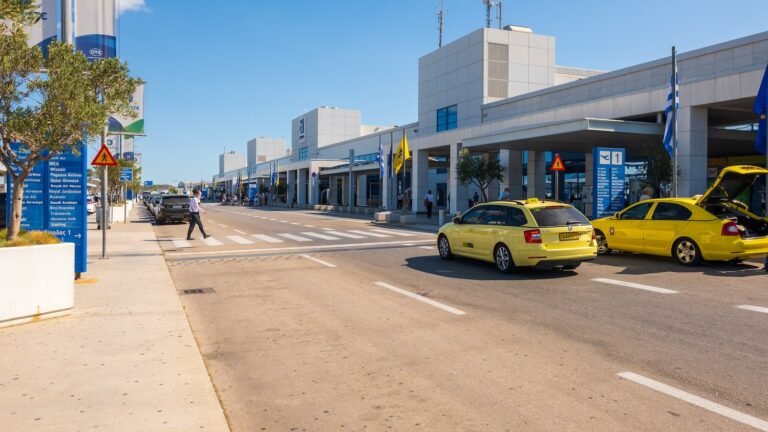
Navigating from Athens International Airport (Eleftherios Venizelos) to the correct ferry port is one of the most common logistics challenges for visitors to Greece. Your choice of port depends entirely on your ferry destination, and missing this step can result in arriving at the wrong terminal hours from your ferry departure.
For ferries from Piraeus: Take Metro Line 3 (blue line) from the airport to Monastiraki station (35 minutes, €9 including airport surcharge), then change to Metro Line 1 (green line) toward Piraeus (22 minutes, included in ticket). Alternatively, take the X96 Express Bus directly from the airport to Piraeus Port (70–90 minutes, €5.50 depending on time of day). A taxi or private transfer from the airport to Piraeus costs €40–65 depending on traffic and time of day; Welcome Pickups offers fixed-price airport transfers with no surprises.
For ferries from Rafina: Take the direct bus from Athens Airport Terminal A, Bus Stop 4 (direction: Rafina, every 30–40 minutes, €3, 30–40 minutes). Taxis from the airport to Rafina cost €25–35; the port is significantly easier to navigate than Piraeus and the shorter journey time makes Rafina the smart choice for eligible destinations.
Athens to Santorini Ferry
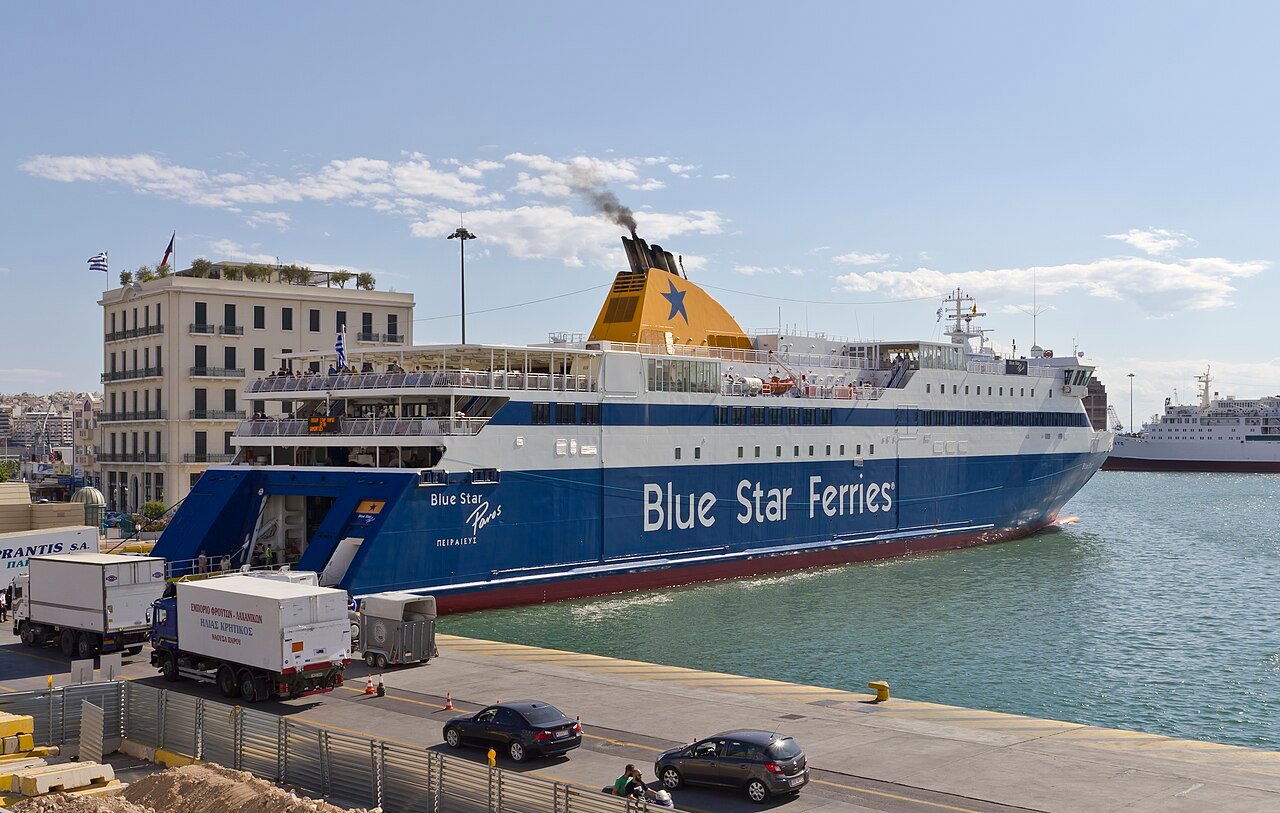
The Piraeus to Santorini ferry is one of Greece’s most popular and frequently sailed routes. Multiple daily departures connect Athens with this iconic volcanic island, offering travelers a choice between speed and economy.
| Ferry Type | Journey Time | Operator | Approx Fare | Departures |
|---|---|---|---|---|
| High-Speed Catamaran | 2.5 hours | Seajets, Golden Star Ferries | €40–65 | 2–3 daily |
| Regular Ferry | 8–9 hours | Blue Star Ferries | €25–35 | Daily evening |
| Overnight Ferry | 10–11 hours | Blue Star Ferries | €20–28 | Nightly |
High-speed catamarans are ideal for travelers who want to maximize time on Santorini—arriving in 2.5 hours means a morning departure from Piraeus delivers you in time for lunch at a caldera-view restaurant. The overnight ferry is the budget-conscious choice, saving one night’s accommodation; you’ll wake up arriving in Santorini harbour as the sun rises over the Caldera cliffs. Book well in advance for June–August sailings, as Santorini ferries are among the first to sell out each summer. See our detailed Athens to Santorini guide for complete logistics.
Athens to Mykonos Ferry
Mykonos is accessible via Piraeus (conventional ferries, 5.5–6 hours) or Rafina (high-speed ferries, 2.5–3 hours). If you’re arriving at Athens Airport and heading straight to Mykonos, Rafina is significantly more convenient—the bus to Rafina takes just 30–40 minutes from the airport, versus 70–90 minutes to reach Piraeus by metro and bus.
| Ferry Type | Journey Time | Port | Approx Fare | Departures |
|---|---|---|---|---|
| High-Speed (from Rafina) | 2.5–3 hours | Rafina | €40–60 | 2–3 daily |
| Regular Ferry (from Piraeus) | 5.5–6 hours | Piraeus | €25–38 | Daily |
| Catamaran (from Piraeus) | 3.5 hours | Piraeus | €45–65 | Daily (summer) |
During peak season, Mykonos ferries from both Rafina and Piraeus fill quickly—book at least two weeks in advance for July and August departures. See our Athens to Mykonos guide for complete logistics including port transfers and accommodation recommendations.
Athens to Crete Ferry
Crete is Greece’s largest island and one of the most popular ferry destinations from Piraeus. Overnight ferries make the journey particularly efficient—you travel through the night and arrive at Heraklion, Chania, or Rethymno early in the morning, ready to start exploring immediately.
| Route | Journey Time | Operator | Approx Fare | Frequency |
|---|---|---|---|---|
| Piraeus → Heraklion (overnight) | 8–9 hours | Anek Lines, Minoan Lines | €40–65 | Daily |
| Piraeus → Chania (overnight) | 9–10 hours | Anek Lines | €42–68 | 5–6x weekly |
| Piraeus → Heraklion (high-speed) | 4–5 hours | Seajets | €70–95 | 3–4x weekly (summer) |
The standard overnight ferry from Piraeus to Heraklion is one of the most popular sea journeys in Greece—thousands of Athenian families make this crossing every summer weekend. Modern vessels feature comfortable cabins (from basic 4-berth to private en-suite doubles), restaurants, cafes, bars, and duty-free shops. Booking a cabin is recommended for comfort, especially with families or during rough winter crossings. Deck passage is the cheapest option but exposed to Aegean winds. See our Athens to Crete guide for complete transfer logistics.
Athens to Rhodes Ferry
Rhodes, the largest Dodecanese island, is a longer ferry journey from Piraeus—typically 12–15 hours overnight. The route passes through several other Dodecanese islands (Kos, Kalymnos, Patmos) on some services, offering beautiful daytime island views if you depart in the afternoon.
| Ferry Type | Journey Time | Operator | Approx Fare | Frequency |
|---|---|---|---|---|
| Overnight Conventional Ferry | 12–15 hours | Blue Star Ferries, Anek Lines | €45–75 | 4–5x weekly |
| Express Ferry (summer only) | 8–10 hours | Seajets | €85–120 | 3x weekly (Jun–Sep) |
Many travelers choose to fly Athens to Rhodes (1.5 hours, €40–80 during sales) rather than take the long ferry, particularly for shorter trips. However, the ferry remains popular with families traveling with vehicles, budget travelers who use the overnight crossing to save accommodation costs, and island-hoppers who want to stop at intermediate Dodecanese islands along the way. See our Athens to Rhodes guide for complete transfer logistics.
Athens to Corfu Ferry
Corfu, in the Ionian Sea, is not served by direct ferries from Athens—the island is geographically separated from Athens by mainland Greece. To reach Corfu by sea, you must first travel to Igoumenitsa on the northwest Greek mainland (7–8 hours by bus from Athens), then take a 1.5–2 hour ferry to Corfu Town. Most travelers find that flying from Athens to Corfu (1 hour) is faster and more practical, especially for visits of less than a week.
| Route | Journey Time | Method | Cost | Notes |
|---|---|---|---|---|
| Athens → Corfu (fly) | 1 hour | Aegean/Sky Express | €40–120 | Fastest option |
| Athens → Igoumenitsa → Corfu (bus + ferry) | 10–11 hours | KTEL + Agoudimos | €35–50 | Budget option |
| Athens → Corfu (ferry + bus package) | Variable | Multiple operators | €40–60 | Scenic but slow |
If the journey itself is part of the experience you seek, the bus-plus-ferry route through northwestern Greece is genuinely beautiful—the road passes through the Pindus Mountains and the historic town of Ioannina. See our Athens to Corfu guide for complete logistics.
Athens to the Cyclades: Paros, Naxos, Kos & More
The Cyclades are the most popular island group for ferry travel from Athens, with Piraeus offering multiple daily departures to Paros, Naxos, Ios, Folegandros, Milos, and dozens of smaller islands. The island-hopping circuit through the Cyclades is one of the world’s great travel experiences—each island has a distinct character, and moving between them by ferry creates a rhythm of discovery that’s impossible to replicate by air.
| Island | Ferry Time from Piraeus | High-Speed Time | Approx Fare |
|---|---|---|---|
| Paros | 5–6 hours | 3 hours | €25–55 |
| Naxos | 5.5–7 hours | 3.5 hours | €28–60 |
| Ios | 7–8 hours | 4 hours | €32–65 |
| Milos | 5–7 hours | 3.5 hours | €28–55 |
| Folegandros | 6–8 hours | 4 hours | €30–55 |
| Kos (Dodecanese) | 11–12 hours (overnight) | 7 hours | €40–80 |
The Cycladic islands are interconnected by ferry, meaning you don’t need to return to Athens between islands. A typical 10-day island-hopping itinerary might visit Paros, Naxos, Ios, and Santorini with simple inter-island crossings of 1–2 hours each. Ferryhopper’s island-hopping planner tool helps you build multi-stop itineraries efficiently. See individual guides for Paros, Naxos, and Kos for complete logistics.
How to Book Greek Ferry Tickets
Booking Greek ferry tickets has become straightforward with several reliable online platforms, though some nuances are worth understanding before your first booking.
Ferryhopper — The Best Comparison Tool
Ferryhopper (ferryhopper.com) is the most comprehensive ferry booking platform for Greek islands, aggregating schedules and prices from all major operators including Blue Star Ferries, Seajets, Anek Lines, Minoan Lines, Golden Star Ferries, and Ionian Pelagic Lines. The platform allows you to compare vessel types, cabin options, and prices in one place; book online and receive e-tickets immediately; and manage itinerary changes or cancellations easily. Ferryhopper is particularly useful for island-hopping itineraries where you need to coordinate multiple ferry legs with minimum connections. The platform is available in English and several European languages, making it accessible to international travelers.
Booking Directly with Ferry Operators
You can also book directly with individual ferry operators through their own websites. Blue Star Ferries (bluestarferries.com) operates the most extensive network, covering routes to the Cyclades, Dodecanese, and Crete from Piraeus. Seajets (seajets.gr) specialises in high-speed catamaran services and often offers promotional fares if you book directly. Anek Lines (anek.gr) and Minoan Lines cover the Crete and Adriatic routes. Direct booking can sometimes be cheaper than aggregators, particularly during promotional periods; however, comparing multiple operators manually is time-consuming and Ferryhopper usually offers comparable or better prices with the added convenience of a single booking interface.
When to Book
The optimal booking window depends on the season and route. For July–August travel to popular destinations (Santorini, Mykonos, Crete), book 4–8 weeks in advance for high-speed ferries and 2–4 weeks for regular ferries. Popular routes on peak dates (August 15th, the assumption of the Virgin Mary—one of Greece’s biggest public holidays—generates enormous ferry traffic) can sell out months ahead. For shoulder season travel (May–June and September–October), 1–2 weeks in advance is generally sufficient for most routes. Winter travel requires less advance booking, but schedules are reduced and some routes operate only 2–3 times weekly.
Greek Ferry Tips
What to Expect on Board a Greek Ferry?
Greek ferries range from enormous modern car-carrying vessels (up to 220 metres in length, with capacity for thousands of passengers and hundreds of vehicles) to smaller high-speed catamarans that carry passengers only. Large conventional ferries on overnight routes feature multiple classes of accommodation: deck seating (plastic chairs in open or covered areas), aircraft-style seats in air-conditioned lounges, 4–6 berth cabins (basic bunk beds with private washroom), and first-class cabins with double beds and en-suite bathrooms. Onboard facilities typically include restaurants serving hot Greek food, a cafeteria with sandwiches and drinks, a duty-free shop, slot machines, and occasionally a cinema screen showing Greek films. Wi-Fi is available on most large ferries but reliability varies; download entertainment before boarding. Luggage is stored in designated areas on car decks; valuables should be kept in cabins or carried with you.
Is it Worth Booking a Cabin?
For overnight crossings of more than 8 hours, booking a cabin is strongly recommended—arriving rested significantly improves your first day on the island. Cabin costs add €20–40 per person for a basic 4-berth cabin to €60–120+ for a private first-class double; these prices are on top of the base passenger fare. Budget travelers often opt for aircraft-style reclining seats in air-conditioned lounges (€5–10 supplement), which are comfortable enough for a single night’s crossing in summer. Deck passage is free with your ticket but can be cold and noisy on overnight crossings; acceptable in good weather but miserable in rough seas or cold months.
Are Greek Ferries Safe?
Modern Greek ferries are well-maintained and operate under strict EU maritime safety regulations. The industry underwent comprehensive safety improvements following the Express Samina disaster in 2000, and standards have risen dramatically since then. All vessels are required to carry sufficient lifeboats, conduct regular safety drills, and meet EC safety standards. The primary weather-related risk is the Aegean’s notorious meltemi wind (strong north winds common July–September), which can cause rough seas and occasional route cancellations; operators post weather updates and cancellation notices on their websites and at port information desks. If your ferry is cancelled due to weather, operators are legally required to offer a refund or alternative routing.
Arriving at the Port
Arrive at the ferry port at least 2 hours before your departure time—1.5 hours minimum for smaller ports, 2.5–3 hours for Piraeus where locating your gate takes additional time. Print or download your e-ticket before arriving; most operators now accept mobile tickets, but having a printout as backup prevents problems if your phone battery dies. At large ports like Piraeus, your ticket specifies which gate (E1, E6, E9, etc.) to go to; signs direct you but the port is sprawling and walking times between gates can be 10–15 minutes. Vehicles must check in 1–2 hours before departure to drive into the car deck loading queue. Pier cafes and restaurants at ferry ports are generally expensive and mediocre; eat before you arrive or wait until you board, where food quality is usually better.
Frequently Asked Questions
How long is the ferry from Athens to Santorini?
The fast ferry (high-speed catamaran) from Piraeus to Santorini takes approximately 2.5 hours and costs €40–65. The regular overnight ferry takes 8–9 hours and costs €25–35. Both depart from Piraeus Port. The fast ferry is ideal for a quick trip; the overnight ferry saves accommodation costs if you’re on a budget.
What is the cheapest way to get from Athens to the Greek islands?
The cheapest way to reach Greek islands from Athens is by conventional (slow) ferry, particularly overnight sailings where you save one night’s hotel costs. Deck passage on an overnight Piraeus–Crete ferry costs around €40–50 all-in and replaces a hotel night. For shorter crossings, regular ferries to the Cyclades (Paros, Naxos, Ios) cost €25–35 and depart multiple times daily from Piraeus. High-speed catamarans are significantly more expensive (€50–120) but save 2–5 hours per journey—worth the premium if time is limited.
Which ferry port is closest to Athens Airport?
Rafina Port is closest to Athens International Airport, just 12 km away (20–30 minutes by taxi or 30–40 minutes by direct bus). If your ferry destination is served from Rafina (Mykonos, Andros, Tinos, Evia), this is the most convenient port for airport arrivals. Piraeus is 40 km from the airport and requires 70–90 minutes via metro and bus or 45–60 minutes by taxi. Lavrio is 60 km from the airport and generally not recommended unless your specific route requires it.
Do I need to book Greek ferry tickets in advance?
For peak season travel (June–August), booking in advance is essential for popular routes—Piraeus to Santorini and Piraeus to Mykonos routes can sell out 2–4 weeks ahead for high-speed ferries. For travel with a vehicle, book even further in advance as car-deck space fills first. For shoulder season (May, September–October), 1 week in advance is usually sufficient. Off-season (November–April), you can typically book a day or two ahead for most routes. Always book in advance for travel around Greek public holidays, particularly August 15th (Assumption of the Virgin Mary), when ferries across Greece are completely full.
Can I island-hop using ferries from Athens?
Yes—island-hopping is one of the great joys of Greek travel and the Cyclades are perfectly set up for it. From Athens, take a ferry to your first island (Paros or Naxos are ideal starting points), then hop between islands using short inter-island ferries of 1–3 hours. A typical 10-day itinerary might cover Athens → Paros (5 hours) → Naxos (1 hour) → Ios (2 hours) → Santorini (1.5 hours). Use Ferryhopper’s multi-destination search to build your itinerary, and book each leg separately as you go or all in advance for peak season. Luggage is checked through to your final destination on some Blue Star routes; otherwise, you carry it between ferries.
For complete transfer guides to each island, see our individual destination pages: Santorini, Mykonos, Crete, Rhodes, Corfu, Paros, Naxos, Kos, and Kefalonia for comprehensive destination overview.
Athens Airport to Greek Islands: Transfer Guides
Planning your Athens airport to island connection? See our full guides: Athens Airport to Santorini, Athens Airport to Mykonos, Athens Airport to Crete, Athens Airport to Rhodes, Athens Airport to Corfu, Athens Airport to Paros, Athens Airport to Naxos, Athens Airport to Zakynthos, Athens Airport to Kefalonia, and Athens Airport to Kos. Also see our complete Greek islands guide and Piraeus cruise port transfers.
Guided Tours & Day Trips from Athens
Combine your transfer with a guided experience — browse top-rated tours departing from Athens.
Where to Stay in Athens
Looking for accommodation? Compare hotels and guesthouses across Athens for the best prices.
📱 Stay Connected in Greece
Activate a Greek eSIM before you land — instant setup on any compatible phone. No queues, no contracts.
Get Your Greece eSIM →4G/5G coverage · Instant activation · No contract
For a full comparison of all Athens Airport transfer options, see our Athens Airport Transfers Complete Guide 2026.
Athens Airport Transfer
Ready to Book Your Taxi?
€40 fixed rate • Meet & greet at arrivals • 24/7 availability
Book Your Transfer →