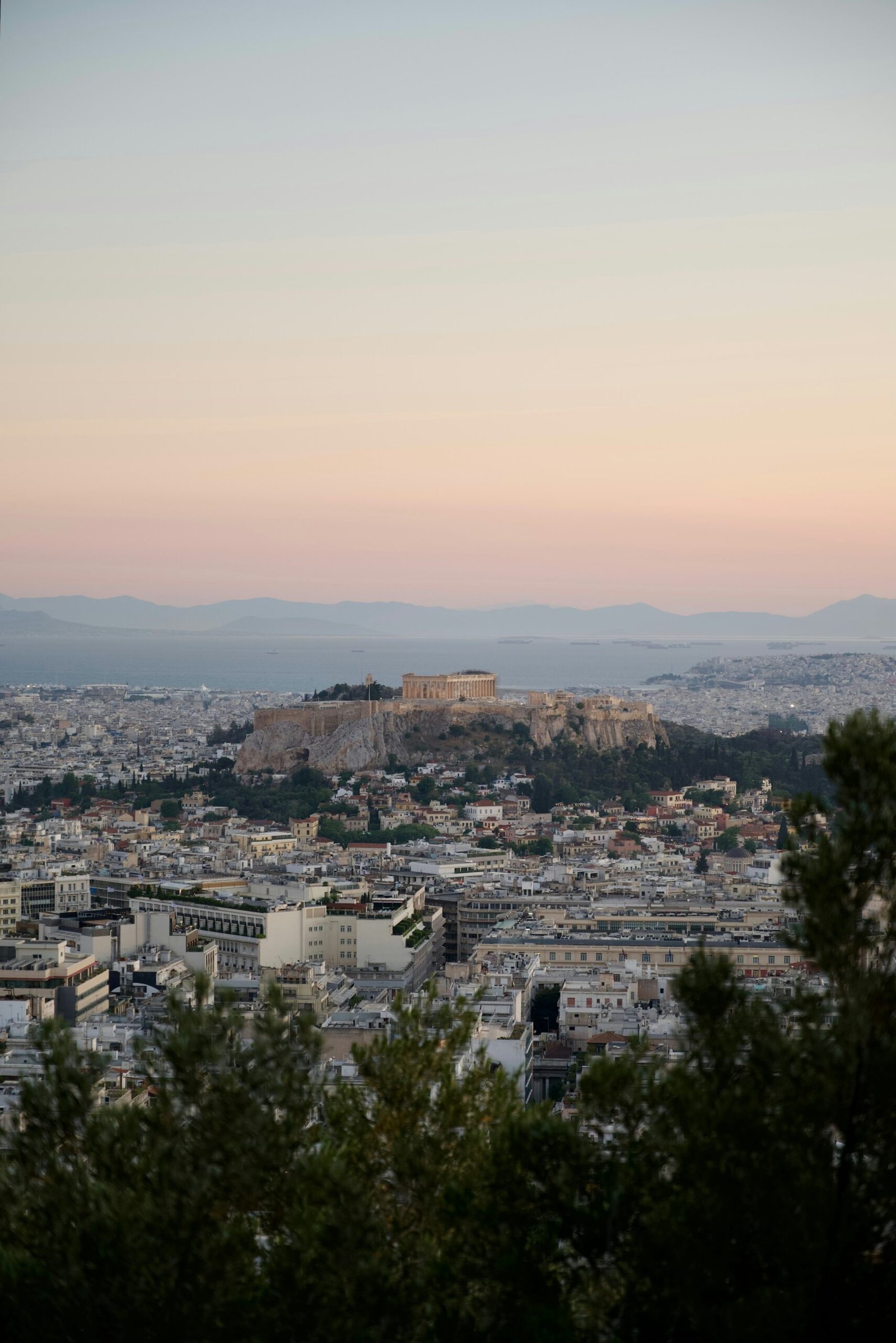
Athens in January: Weather, Epiphany and the Quietest Month of the Year
January is Athens at its most honest. It is the coldest month, the emptiest month and the cheapest month, and if your interest in the city is the actual city rather than the beach, it is a seriously underrated time to come. You will stand in front of the Parthenon with a handful of other people. You will get a table anywhere. You will also need a coat, and you will have to work around sites that close at half past three.
Athens weather in January
| What to expect | January in Athens |
|---|---|
| Average daily high | 12°C |
| Average daily low | 5°C |
| Sea temperature | 15°C |
| Sunshine | about 4 hours a day |
| Days with some rain | 8 |
| Total rainfall | 63 mm |
| Daylight | 9h 25m on 1 January, lengthening to 10h by the end of the month |
Twelve degrees and five degrees are the averages, and the averages hide the two things that matter. First, Athens in January is frequently sunny and still — a windless 13°C afternoon with blue sky is a lovely day to walk. Second, when the north wind comes down off the mountains it feels far colder than the thermometer says, and Athenian buildings are built to shed summer heat, not hold winter warmth. Older apartments and small tavernas can be genuinely chilly indoors.
It is the coldest month but not a harsh one by European standards. Frost happens a few mornings a year. Snow in the centre is a once-in-several-winters event that briefly paralyses the city.
Book your private airport transfer – instant confirmation
Welcome PickupsEpiphany, 6 January — the one unmissable date
Theophania, the Blessing of the Waters, is the closing act of the Greek Christmas period and the most striking public ritual you can see in Athens in winter. After the morning liturgy, a procession goes to the water, a priest throws a cross into the sea, and young men dive in after it. Whoever surfaces with the cross is said to have a year of good fortune.
The ceremony runs at roughly 10:00 to 11:00. Piraeus hosts one of the largest in Greece, with thousands of spectators and a naval presence; there are smaller, more intimate versions all along the Athens coast at Faliro, Glyfada, Voula and Vouliagmeni. The water is 15°C. The divers do not appear to care.
6 January is a full public holiday. Banks, government offices and most shops close. Tourist-facing restaurants and cafes in the centre generally stay open.
What else happens in January
- Vasilopita, 1 January. A cake with a coin baked into it is cut at midnight or on New Year’s Day, with slices allocated to the house, to absent family, and to each person present. Whoever gets the coin has luck for the year. Many tavernas and businesses do their own cutting in the first week.
- The winter sales. Greek ekptoseis run from roughly the second week of January to the end of February, with real discounts on Ermou Street and in the Kolonaki boutiques.
- Ski season at Parnassos. January and February are the heart of it, two hours from the city.
- Opera and concert season. The Greek National Opera at the Stavros Niarchos Foundation Cultural Center is in full swing, and the SNFCC itself — park, library, architecture — is a free and excellent half-day in weather too poor for ruins.
What’s open in January
Everything that matters, with the winter timetable. The Acropolis runs 08:00 to 17:00, last admission 16:30. The National Archaeological Museum, the Acropolis Museum, the Benaki and the Museum of Cycladic Art all keep normal hours and are at their best when it is raining.
Book your private airport transfer – instant confirmation
Welcome PickupsOutlying archaeological sites close at 15:30 from 1 November to 31 March, which is the single scheduling fact that governs any January day trip. 1 January is a closure day for the Acropolis and the state museums.
Free admission on the first and third Sunday of the month continues through winter. In January 2027 that means Sunday 3 January and Sunday 17 January.
Ticket prices are the same in January as in July. Greece abolished the cheaper winter admission rate on 1 April 2025 — the Acropolis is €30 year-round, major sites such as Delphi and Mycenae are €20, and anything still quoting a winter discount is out of date.
Is January a good time to visit Athens?
It is the best month of the year for three specific trips, and the wrong month for everything else.
Book your private airport transfer – instant confirmation
Welcome PickupsIt works brilliantly for: a first visit focused on the ancient sites and museums, because you get them to yourself; a food-and-city trip, because the restaurants are full of Greeks rather than tourists and you can walk into almost anywhere; and a budget trip, because this is the floor of the Athens hotel market.
It does not work for: islands, beaches, or anything requiring a long day outdoors. Ferry schedules are at their annual minimum, most island accommodation is shut, and a January crossing can be cancelled by weather with no notice.
Day trips that work in January
- Arachova and Mount Parnassos — peak season. The ski centre is running, the town is full of Athenians at weekends, and it is the one day trip that is genuinely better in January than in July. Two hours each way.
- Delphi — snow on Parnassos above the sanctuary is the version of Delphi almost no visitor sees. Leave Athens by 08:00 for the 15:30 close.
- Nafplio — the reliable winter choice. A town, not a site, so bad weather and short hours matter far less.
- Nemea wine country — tasting rooms are indoors, the wineries are open year-round, and January is pruning season rather than harvest, which makes for a quieter and more conversational visit.
Getting around Athens in January
Public transport runs full winter schedules, with reduced services on 1 January and 6 January. The airport metro operates every day of the year.
The practical risks in January are weather and industrial action. Heavy rain makes street taxis effectively unobtainable within minutes; if you have an early flight, book a transfer rather than improvising. And the winter months are an active period for Greek union action, where a 24-hour transport or ferry strike typically surfaces with a few days’ notice. Our live Athens disruptions tracker is updated every day.
Frequently asked questions about Athens in January
How cold does Athens get in January?
January averages a daily high of 12°C and a low of 5°C, making it the coldest month of the Athens year. Frost occurs on a handful of mornings and snow in the city centre is rare. The bigger factor is the north wind, which makes a 10°C day feel considerably colder, and the fact that Greek buildings are designed to stay cool rather than warm.
Is anything closed in Athens in January?
1 January and 6 January are public holidays. The Acropolis and state museums close on 1 January but are open on 6 January. Throughout the month, outlying archaeological sites close at 15:30 and the Acropolis at 17:00. Island ferry routes run minimal winter schedules and most island businesses are shut until spring.
What is the Blessing of the Waters in Athens?
On 6 January, Epiphany, a priest throws a cross into the sea and swimmers dive to retrieve it. The largest ceremony in the Athens area is at Piraeus, starting around 10:00, with smaller versions at Faliro, Glyfada, Voula and Vouliagmeni. It is free to watch and is the most distinctive thing happening in Athens in January.
Related guides
- Athens in February: the turn towards spring
- Athens in December: Christmas and what’s open
- Athens airport to Arachova and Parnassos
- Athens airport taxi: what it actually costs
- Athens strikes and travel disruptions: live tracker
Athens Airport Transfer
Ready to Book Your Taxi?
€40 fixed rate • Meet & greet at arrivals • 24/7 availability
Book Your Transfer →